Carpet and Pad
Carpet can sometimes be dried and relaid after a clean-water leak. Pad soaks up water like a sponge and is usually replaced.
Extraction, Drying and Tear-Out
Soaked carpet, swollen baseboards or a dripping ceiling? Get the water out and the structure dried before mold and hidden damage set in.
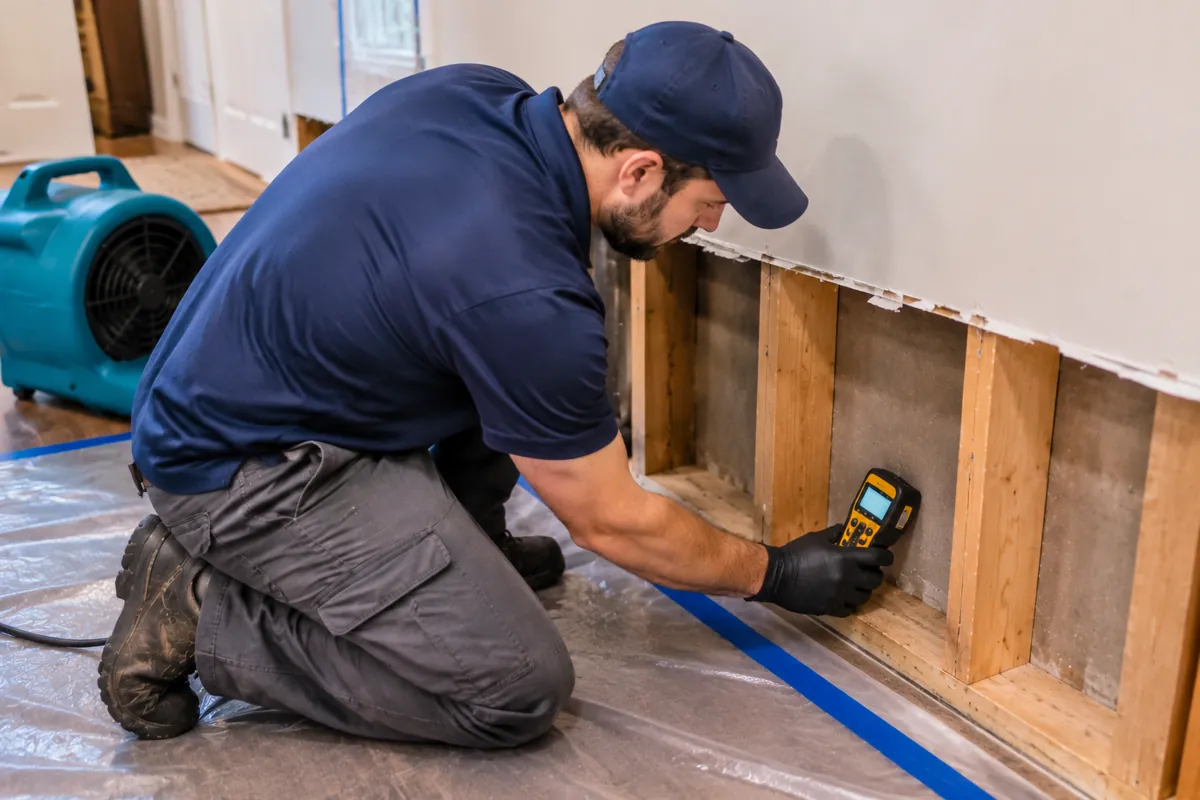
Baseboards pulled so the wall cavity can be checked and dried.
What's Included
Water damage restoration covers everything between the leak and a room you can use again: stopping the source, extracting standing water, drying the structure and removing materials that can't be saved. Repairs follow once readings confirm the area is dry.
A Wilmington water damage restoration job starts with safety. The contractor checks for wet outlets, sagging ceiling drywall and contaminated water before anyone walks the room, then maps how far moisture spread with meters.
Emergency water damage restoration focuses on the first day, when extraction and drying do the most good. For costs, common leak sources and the bigger picture on Wilmington water damage, start with the main guide.
Clean, Gray or Black Water
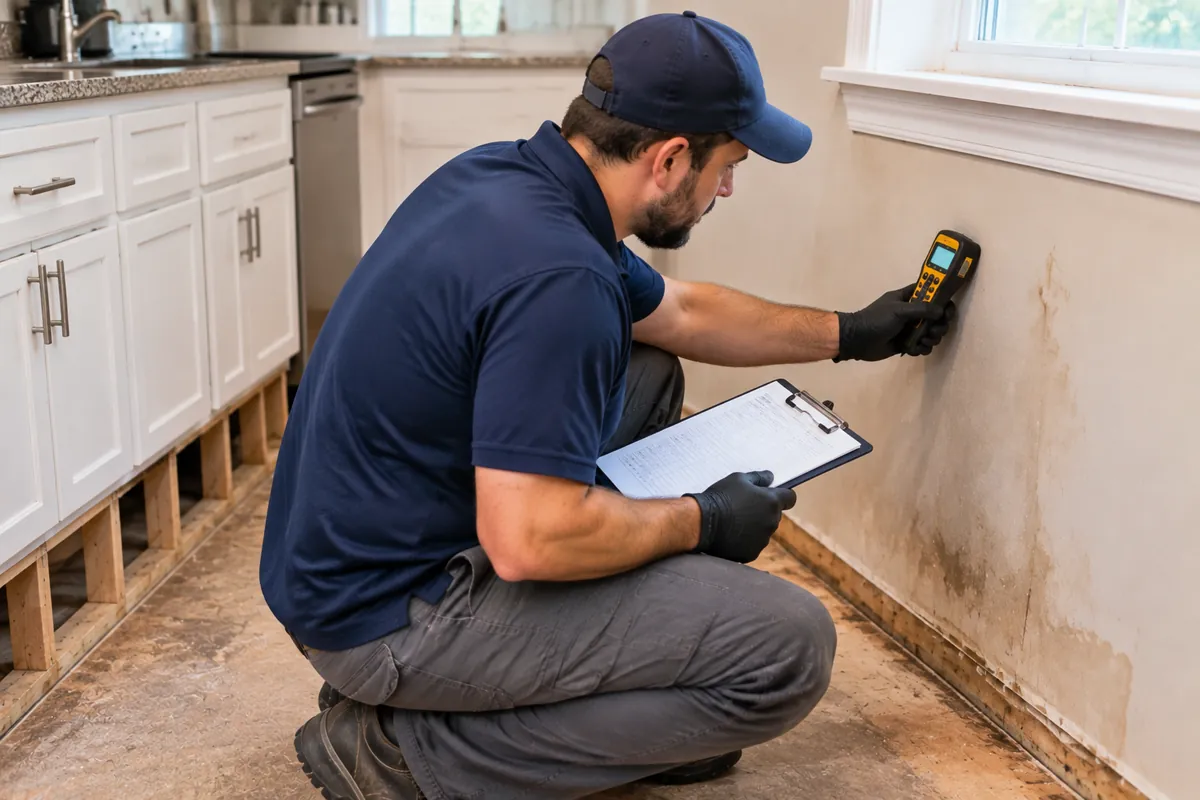
Clean water from a supply line is handled differently from gray water out of a washing machine or black water from a sewer backup or floodwater. The category decides what can be dried in place and what has to be thrown out.
With clean water caught early, carpet, pad and drywall can often be dried. Gray and black water usually mean porous materials come out, surfaces get cleaned and disinfected, and workers wear protective gear.
Time matters too. Clean water that sits can pick up contamination from the materials it soaks, so a slow leak found late may be treated like a dirtier category.
By Material
Carpet can sometimes be dried and relaid after a clean-water leak. Pad soaks up water like a sponge and is usually replaced.
Wood cups and crowns as it absorbs water. Fast extraction and drying from above and below give it the best chance of flattening out.
Water gets under click-together floors and stays trapped there. Planks usually come up so the subfloor underneath can dry.
Wet drywall can sometimes dry in place. If it's swollen, crumbling or touched dirty water, the bottom section is cut out and wet insulation is removed.
Toe kicks and cabinet backs hide wet subfloor. Removing the toe kick or drilling small holes lets air reach the space behind.
Items are moved or set on blocks so they stop wicking water. Photos of damaged contents help with an insurance claim.
From Start to Finish
Hazards come first: power to wet areas, weakened ceilings and contaminated water. The source is stopped or controlled before drying starts.
Meters, and sometimes thermal cameras, show how far water spread into walls, floors and cabinets, including spots that look dry.
Standing water is pulled out of carpet, pad and hard floors. Removing water as liquid is far faster than drying it out of the air.
Materials that can't be dried or cleaned, like soaked pad or swollen drywall, are removed so the structure behind them can dry.
Air movers and dehumidifiers run while readings are taken and logged. Equipment is moved or added as materials dry at different rates.
When materials reach dry readings, the repair list is written up: drywall, insulation, trim, flooring or paint.
Local Conditions
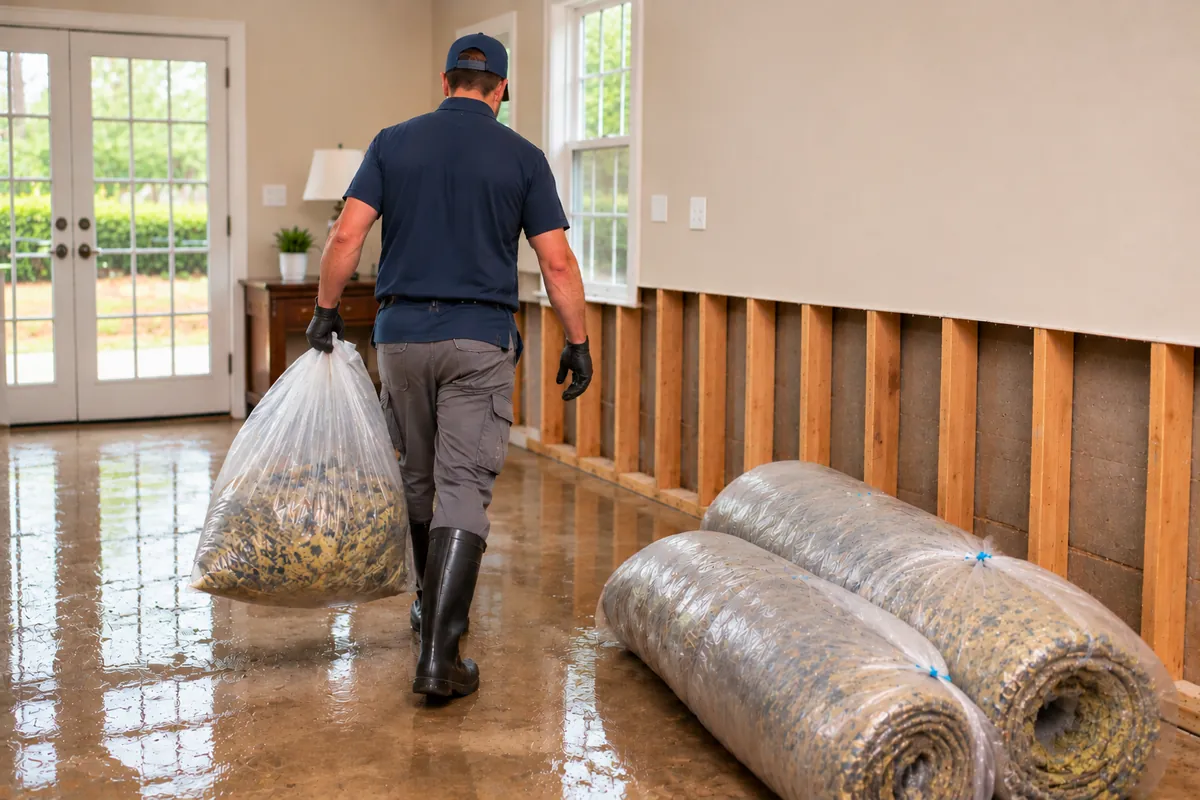
Outdoor water counts as contaminated, and that changes the cleanup. NOAA's tide gauge near the Cape Fear River logged 84 days of high-tide flooding in 2016, so ground-floor rooms near the riverfront that take on tidal or storm water usually lose their carpet pad and the lower section of drywall.
Rebuilding after drying often needs a permit, and in the city those come from New Hanover County Building Safety rather than City Hall. Ask the contractor to check what your repairs need before walls go back up.
Storm season is when demand peaks for water damage restoration. Wilmington, NC homes hit by the same storm compete for the same equipment, so ask for daily moisture readings and photos to keep a clear record of your job.
Comparing Estimates
A clear estimate lists the rooms affected, the water category, what will be extracted, what may be removed, the drying equipment and how drying will be checked. Repairs should be priced separately from the emergency work.
Paperwork helps with insurance. Ask for photos, daily moisture readings and equipment logs; most water damage restoration services provide them, and your insurer decides what the policy covers.
Be wary of anyone who wants to tear out large areas before measuring, or who promises every item can be saved. Readings should drive every decision, from a single wet closet to a whole-floor water damage clean up. Wilmington, North Carolina offices and shops in shared buildings also need neighboring units checked.
Price Guide
Water extraction, drying and tear-out typically costs about $1,200 to $5,000 for a limited residential job, such as one or two rooms of clean water from a broken supply line.
Contaminated water, large areas, hidden moisture and rebuilding push the price higher. These are typical ranges, not quotes, and the contractor prices your job after measuring it.
Wet floors or walls? Get readings before the damage spreads.
Call (910) 218-8308FAQ
Emergency water restoration is the first-day work: stopping the source, extracting standing water and setting up drying equipment. It limits how far water spreads into walls and floors.
Often, if the water was clean and extraction started early. Drywall and pad that swelled or touched dirty water usually come out, and hardwood has the best chance with fast drying from above and below.
Coverage depends on your policy and the cause. Sudden events like a burst pipe are treated differently from long-term leaks or outside flooding, which usually needs a separate flood policy.
Only for clean water, and only if outlets and cords are dry. Fans can spread contaminated particles from sewage or floodwater, so keep those rooms closed.
Usually not for one or two rooms of clean water. Contaminated water, loss of power, or kitchen and bathroom damage can make a short move-out sensible.
Yes. Sewage is black water, so porous materials it touched are removed, surfaces are cleaned and disinfected, and workers use protective gear.
Extraction, drying and tear-out typically costs about $1,200 to $5,000 for a limited residential job. Contaminated water and rebuilding cost more.
Describe what happened, when it started and which rooms are wet. The contractor can measure the spread and explain the drying and repair plan before work starts.