Water Category
Clean water from a supply line costs less to handle than gray or black water, which needs protective gear and more removal.
Choosing Who to Call
Need one company for extraction, drying and mold? Get the damage measured and the price explained before any work starts.
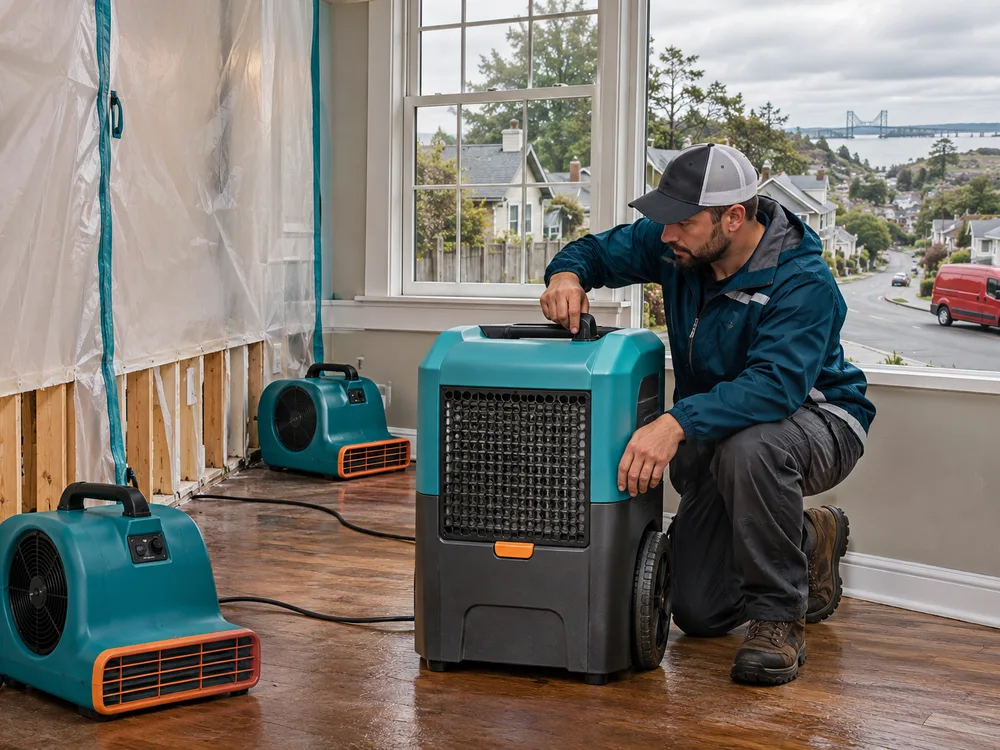
A visit starts with measuring the damage.
Questions to Ask
Most water damage restoration companies offer the same basics: extraction, drying, tear-out and cleanup. What separates a good visit is whether the technician measures before recommending demolition and explains the plan in plain language.
Ask how moisture will be tracked, which materials may come out and why, and whether repairs are priced separately from drying. Those answers should come on the first visit from any water damage restoration company. Wilmington NC homes and businesses face the same storms and leaks, so the questions don't change from job to job.
If you're still sorting out what happened, the page on water restoration Wilmington covers costs, common leak sources and first steps.
On the First Visit
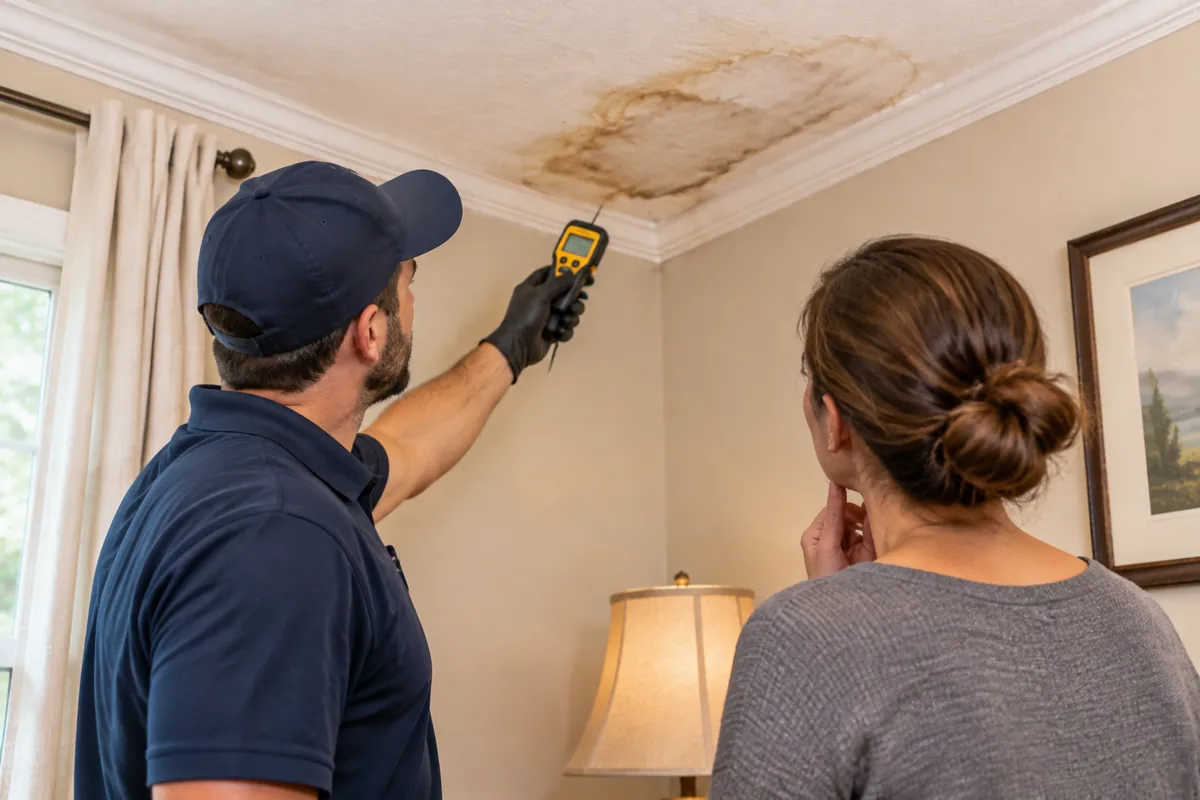
A good visit starts with finding where the water came from and how far it went. The technician checks walls, floors and cabinets with a meter, shows you the wet areas and explains what can be dried and what has to come out.
You should get the options and the price before work starts, with mitigation separated from repairs. Water mitigation company estimates often list equipment by the day, so ask how drying will be confirmed and how often readings are taken.
The work goes ahead once you approve it. Daily readings and photos should be available if you're filing an insurance claim.
Pricing
Clean water from a supply line costs less to handle than gray or black water, which needs protective gear and more removal.
Square footage and the number of rooms set how much equipment runs and for how long.
Extractors, air movers and dehumidifiers are usually billed per unit per day, plus monitoring visits.
Removing drywall, pad, flooring or cabinets adds labor and dump fees.
Moving, blocking up, cleaning or packing out furniture and belongings is usually its own line item.
Replacing drywall, trim, flooring and paint is priced as repairs, apart from the emergency work.
What to Expect
Say where the water came from, which rooms are wet and when it started. Photos help.
A local technician comes out to inspect and measure the damage.
The technician maps moisture, checks the water category and shows you the wet areas.
The estimate lists extraction, drying, removal and repairs before work begins.
Drying starts once you approve, with readings taken until materials are dry.
North Carolina Rules
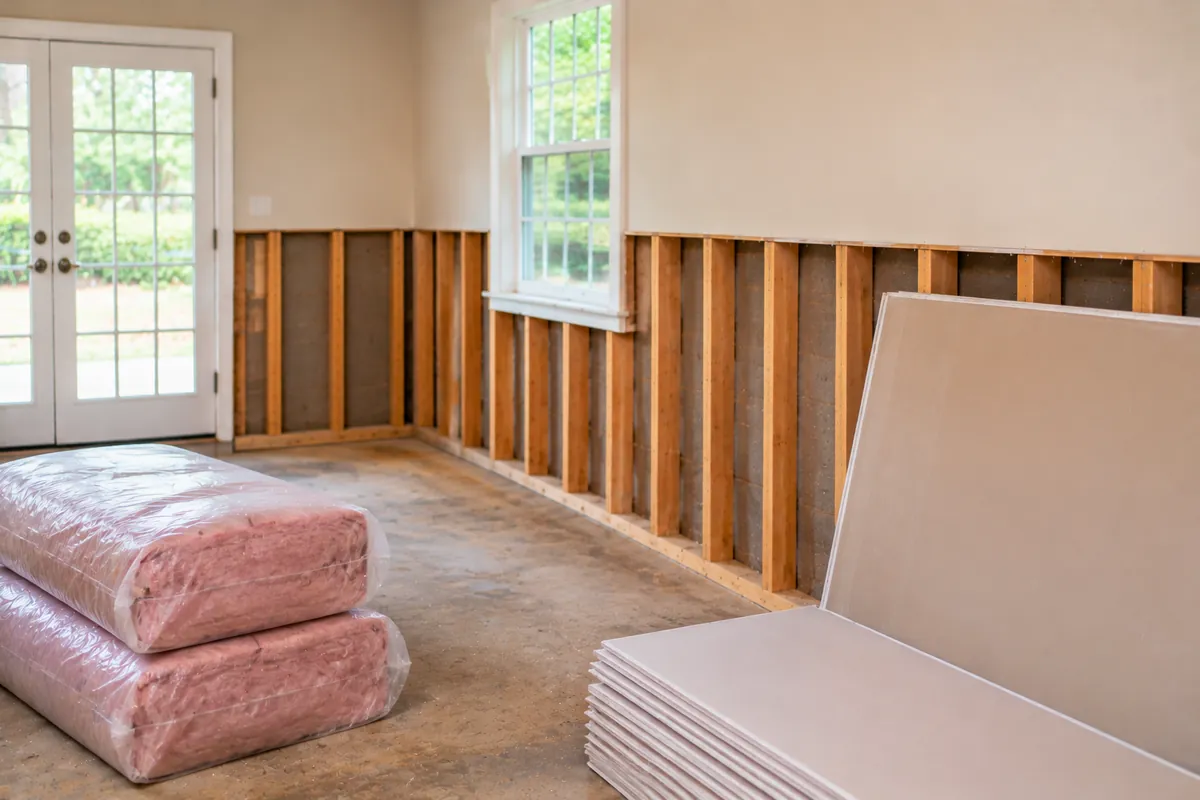
Drying and tear-out generally aren't treated as construction in North Carolina, but rebuilding walls and floors on a job of $40,000 or more requires a state general contractor license. Ask whether the company doing your repairs holds one before a large rebuild starts.
Out-of-state remediation companies, which often arrive after big storms, may not realize a North Carolina license is needed for larger repairs. That's worth checking with any water clean up companies knocking on doors after a hurricane.
Local or not, ask for the license number on large rebuilds when comparing restoration companies. Wilmington, NC homes damaged in the same storm often need the same repairs at once, and a written scope keeps your job from being rushed.
Dry First
Most jobs split into two parts. Water damage companies handle the emergency side, extraction, drying and tear-out, and the rebuild follows once readings show the structure is dry.
Closing up a wall too early traps moisture and can lead to mold, so the rebuild should wait for dry readings, not a set number of days. Some crews at a water remediation company do both parts; others hand repairs to a separate contractor.
Ask whether the water damage restoration contractors on your job will also handle repairs, and whether water damage restoration specialists will be on site for drying checks.
Price Ranges
Water extraction, drying and tear-out typically costs about $1,200 to $5,000 for a limited residential job, such as one or two rooms of clean water from a broken supply line.
Mold remediation typically costs about $900 to $3,500 for a contained residential job. These are typical ranges, not quotes.
Comparing companies? Get the damage measured and priced first.
Call (910) 218-8308Before You Hire
A restoration company handles water extraction, structural drying, tear-out of damaged materials, cleaning and often mold remediation. Many also rebuild drywall, trim and flooring once the structure is dry.
Water extraction, drying and tear-out typically costs about $1,200 to $5,000 for a limited residential job, and mold remediation typically costs about $900 to $3,500 for a contained residential job.
A state general contractor license is required for construction work of $40,000 or more. Drying and tear-out alone generally don't count, but large rebuilds do.
You can do both at once. Stop the source, take photos, call your insurer to start the claim and get drying started, since waiting can make the damage and the claim larger.
Check your policy. Many policies let you choose who does the work, but ask your insurer before signing anything.
Yes. Service is available for homes and businesses in Wilmington, North Carolina. Call (910) 218-8308.
No. You can get the assessment and the price, then decide.
Describe what happened and get a local technician scheduled to measure the damage and explain the price.