Drywall
Moldy drywall is cut out past the visible growth, bagged inside the containment and carried out sealed.
Mold and Musty Odors
Musty smell or spots spreading on drywall? Get the moisture source found and the growth removed so it doesn't come back.
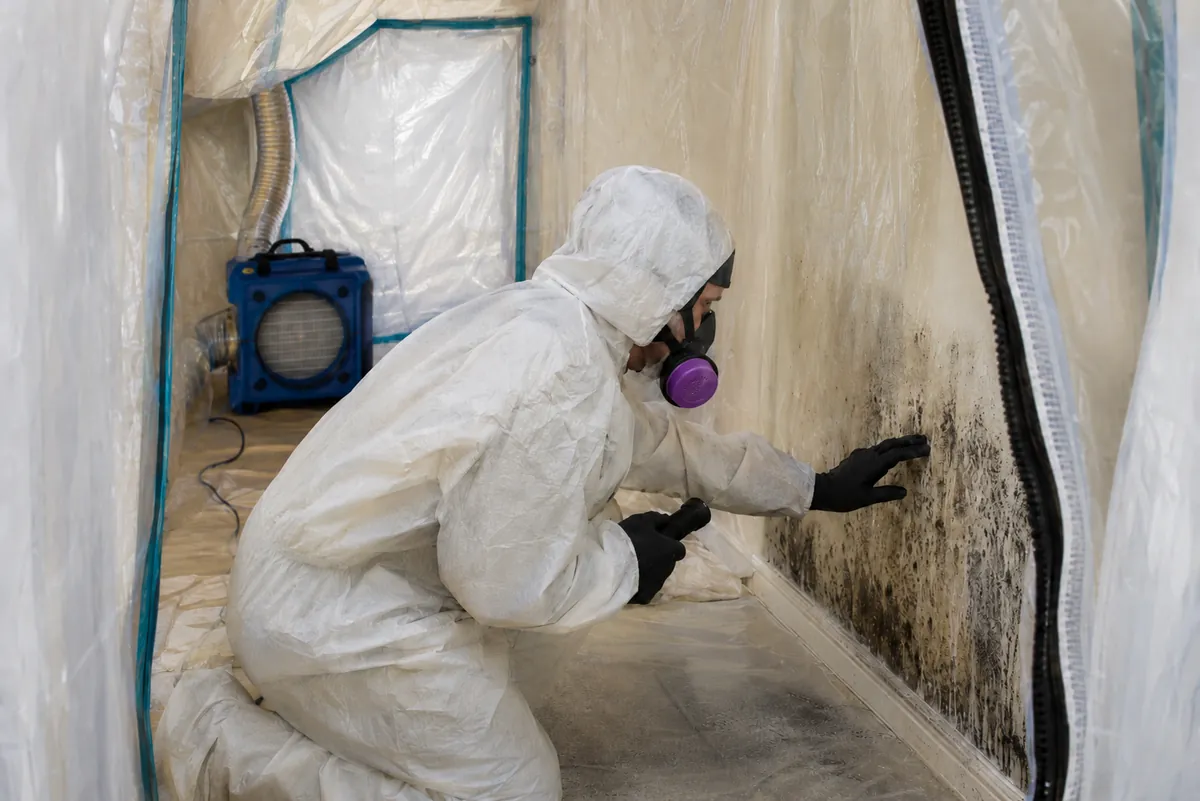
Containment planning around an affected wall.
Mold and Moisture
Wilmington mold remediation has to deal with two things: the growth you can see and the moisture that let it grow. Cleaning the spots without fixing a leak, a sweating duct or a damp crawl space just resets the clock.
Most mold calls start as water problems: a slow leak under a sink, a roof drip after storms or an AC drain that backed up. Mold and water remediation are usually handled together, with drying and removal on one plan. For the water side, start with the Water Damage Wilmington NC guide.
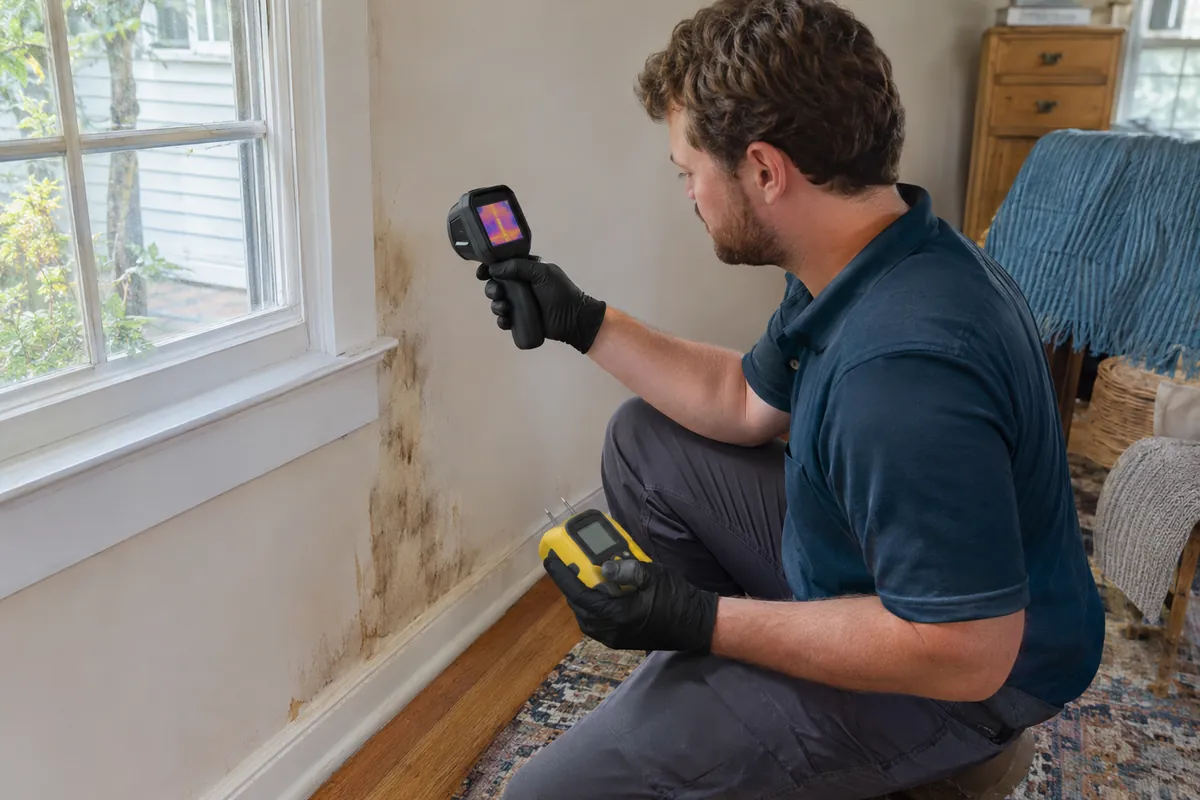
Color doesn't tell you much. A small patch on painted drywall may be surface growth, or it may be the visible edge of wet insulation and framing inside the wall, which only a moisture check and sometimes an opening will show.
DIY or Professional
EPA guidance says a homeowner can usually clean a moldy area smaller than about 10 square feet. Larger areas, growth that keeps returning, or mold inside walls, ductwork or a crawl space call for professional removal with containment.
Water damage and mold remediation also go together after sewage or floodwater, where porous materials usually have to come out anyway. People with asthma, allergies or weakened immune systems should stay out of the area while it's disturbed.
Warning signs worth a call include a musty odor that doesn't go away, stained drywall around supply vents, warped trim and damp insulation in an attic or crawl space.
What Comes Out
Moldy drywall is cut out past the visible growth, bagged inside the containment and carried out sealed.
Wet or moldy insulation can't be cleaned. It's replaced after the cavity has been cleaned and dried.
Carpet and pad with growth are usually thrown out, especially when the water that caused it was dirty.
Stained ceiling tiles and swollen baseboards come out; solid trim can sometimes be cleaned and reused.
Studs, joists and subfloor are usually cleaned, not removed. HEPA vacuuming and scrubbing take growth off the surface of the wood.
Hard items can be cleaned. Upholstery, mattresses and paper with growth often aren't worth saving.
How It's Done
The contractor asks about past leaks and odors, checks affected areas with meters and finds what's keeping materials damp.
The written scope marks the containment boundary, materials to remove, cleaning methods and equipment.
Plastic barriers and a HEPA-filtered air machine keep spores and dust from moving into the rest of the building.
Moldy porous materials are bagged and removed; framing and hard surfaces are HEPA vacuumed and cleaned.
Dehumidifiers dry the structure, and readings confirm materials are dry before anything is closed up.
Drywall, insulation and trim go back only after the moisture source has been fixed.
Budget
Mold remediation typically costs about $900 to $3,500 for a contained residential job, such as one wall, a closet or part of a crawl space.
Large attic or crawl space jobs, extensive tear-out and rebuilding cost more. These are typical ranges, not quotes, and the contractor prices your job after an inspection.
Local Climate
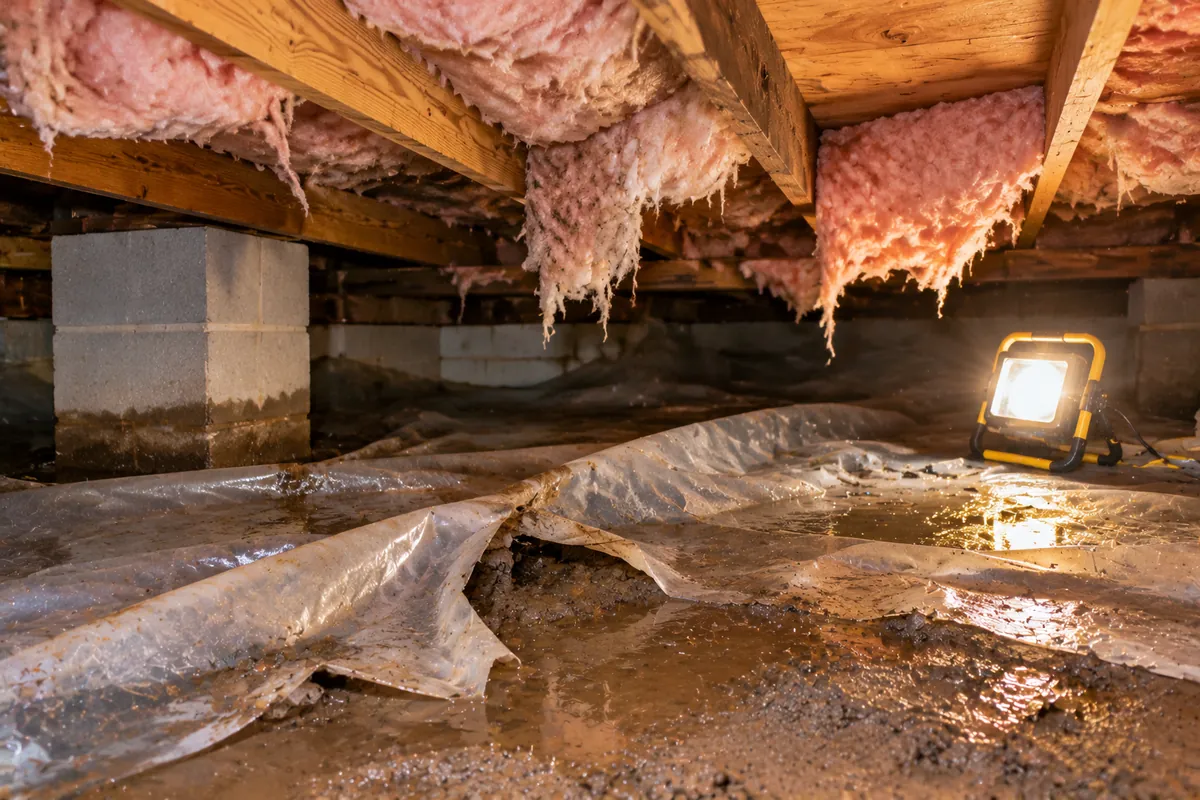
Humidity is the reason mold returns. Wilmington mornings average about 86% relative humidity, so damp crawl spaces, attics and closets rarely dry out on their own, and a dehumidifier or vapor barrier is often part of the fix.
Air conditioners pull that moisture out of indoor air, which makes the drain line and pan a common source. A clogged line can wet a ceiling or wall for weeks, so have it checked when mold shows up near an air handler.
Rentals and businesses need the work area separated from tenants, staff or customers, and the scope should say how the area will be closed off and cleaned.
Common Myths
Painting over mold or spraying bleach on drywall doesn't remove growth from porous material, and the moisture behind it keeps feeding it. Mold damage cleanup means removing what can't be cleaned and cleaning what can.
Testing isn't always needed when growth is visible and the moisture source is clear. It can help when you smell mold but can't find it, or when a landlord, buyer or doctor wants documentation, and an independent tester avoids a conflict of interest.
Ask for a scope that separates remediation from repairs. Fixing the roof, the supply line or the crawl space vapor barrier is what keeps the problem from returning, and water and mold mitigation work best on one plan.
Musty smell won't go away? Find the moisture behind it.
Call (910) 218-8308Answers
Mold remediation typically costs about $900 to $3,500 for a contained residential job. Large attic or crawl space jobs and rebuilding cost more.
Often, if the work area can be sealed off and the kitchen and bathrooms stay usable. People with asthma or weakened immune systems may want to stay elsewhere while materials are removed.
Usually only when it comes from a sudden covered event, like a burst pipe, and not from long-term leaks or humidity. Report water damage quickly, since delays can affect coverage.
The removal is the same, but water damage mold remediation also has to dry the structure and fix the leak, often while drywall and flooring are already open.
Not always. When growth is visible and the moisture source is clear, testing adds cost without changing the plan; it helps when mold is suspected but hidden.
It can if materials get wet again. Fixing the leak, the AC drain or crawl space moisture is what keeps it from returning.
Yes. Homes and businesses in Wilmington, North Carolina are covered. Call (910) 218-8308.
Tell the contractor what you've seen, what you've smelled and when the last leak happened. The visit starts with finding the moisture, then a written removal plan.