Inspection and Moisture Mapping
The assessment documents visible conditions and uses tools such as moisture meters, hygrometers, and thermal imaging when appropriate. Readings help distinguish currently wet materials from old staining.
Serving Wilmington, North Carolina & surrounding areas
24/7 Emergency Response
Mold Remediation in Wilmington, NC
Find the moisture source, contain affected areas, remove contaminated materials safely, and get a clear plan for restoring your property.
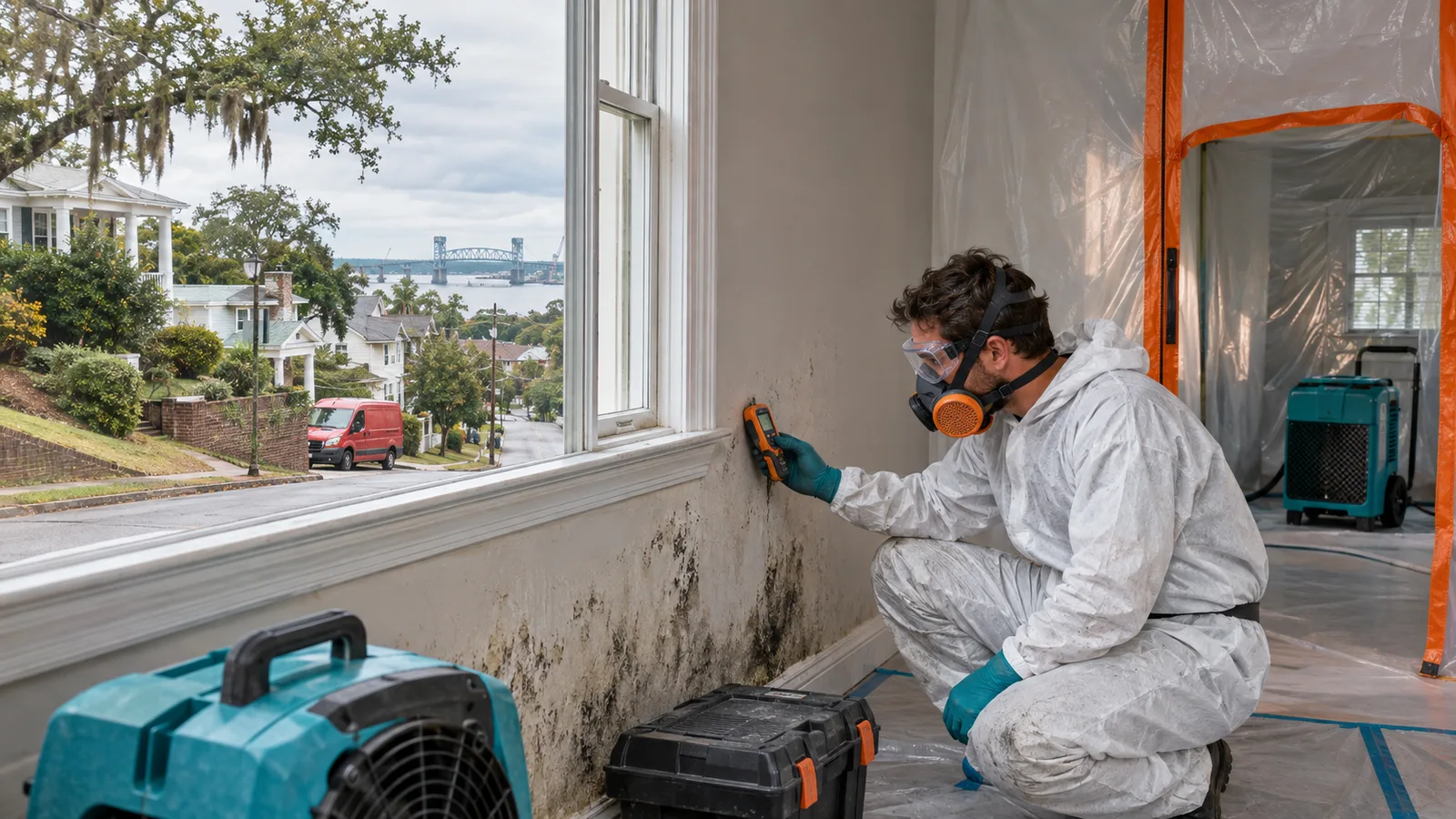
Moisture inspection and containment planning in a Wilmington home.
Mold and Moisture Assessment
Wilmington mold remediation should address both visible growth and the damp conditions that allowed it to develop. Water Damage Wilmington NC begins by examining affected rooms, locating likely moisture sources, and defining the boundaries of the work. The resulting scope may include containment, air filtration, removal of unsalvageable porous materials, detailed cleaning, drying, and recommendations for correcting the moisture problem.
Coastal North Carolina's humidity, wind-driven rain, plumbing leaks, roof failures, and air-conditioning condensation can all leave building materials damp. Crawl spaces and closed wall cavities deserve particular attention because moisture can remain concealed. As an experienced water damage team in Wilmington, NC, we examine the building conditions before selecting equipment or removing material, so the work matches the actual problem.
Mold is not identified reliably by color alone. What looks like a small patch on painted drywall may be surface growth, or it may indicate damp paper facing and insulation inside the wall. A sound assessment considers visible conditions, musty odors, moisture readings, recent leaks, ventilation, and the way air moves through the property.
Professional Remediation
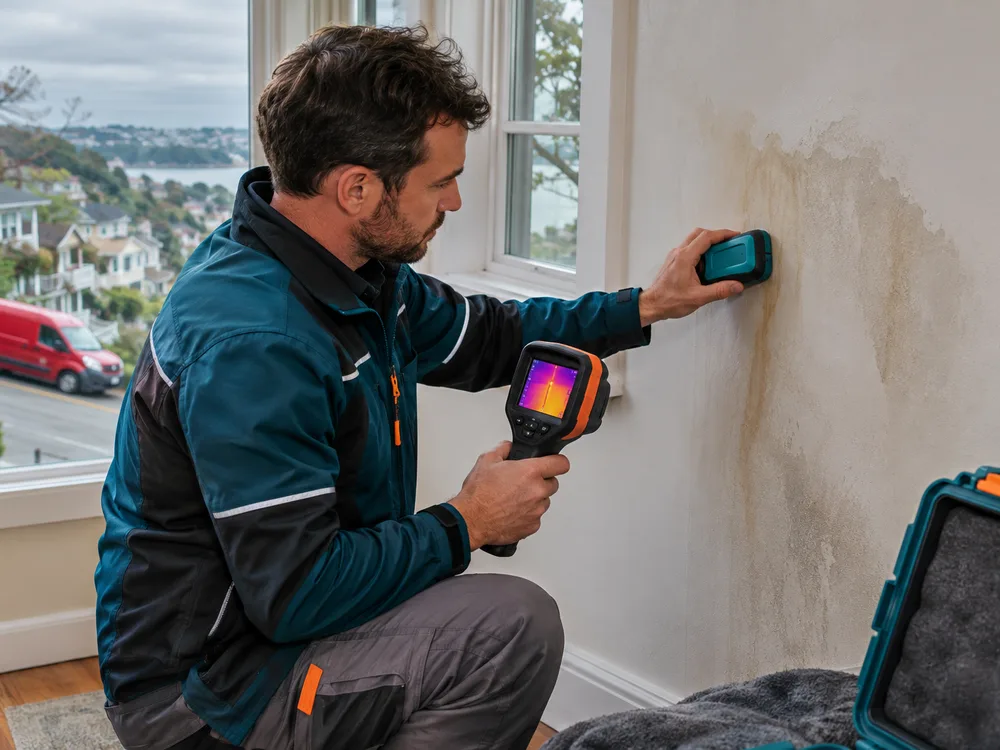
Professional remediation is appropriate when growth covers more than a small, easily cleaned surface, keeps returning after cleaning, follows a significant leak, or appears inside wall and ceiling assemblies. It is also a sensible choice for occupied businesses, rental properties, and homes where containment is needed to keep dust and spores from spreading during removal.
Common warning signs include persistent earthy odors, discolored drywall, staining around supply registers, warped trim, damp insulation, and growth beneath cabinets or flooring. In neighborhoods near tidal water, including parts of Carolina Beach and Wrightsville Beach, wind-driven rain and salt-laden outdoor air can make building-envelope maintenance especially important. In historic downtown Wilmington, older construction and repeated alterations may create concealed pathways for plumbing or roof leaks. Each property still requires an individual inspection; location alone does not prove that mold is present.
If sewage, floodwater, or standing water is involved, the contamination category and affected materials influence the work plan. Occupants should avoid disturbing suspect materials, running fans across visible growth, or applying paint before the moisture source and damaged layers are evaluated.
Remediation Scope
The assessment documents visible conditions and uses tools such as moisture meters, hygrometers, and thermal imaging when appropriate. Readings help distinguish currently wet materials from old staining.
Polyethylene barriers can isolate the work area. Negative air machines fitted with HEPA filters help keep airborne particles from moving into adjacent occupied spaces.
Porous materials such as drywall, insulation, carpet pad, or ceiling tile may need removal when contamination cannot be cleaned effectively. Sound, unaffected construction should remain in place when practical.
Exposed framing and durable surfaces may be HEPA vacuumed and cleaned with methods suited to the material. Simply spraying or painting over growth does not remove contaminated dust.
Dehumidifiers and air movers may be used after containment and removal conditions permit. Plumbing, roofing, drainage, ventilation, or condensation issues should be corrected to reduce recurrence.
The final review checks that the defined work is finished, removed materials are accounted for, and treated spaces are visibly clean and dry. Independent clearance testing may be appropriate for some projects.
Remediation Process
We discuss the moisture history, examine accessible affected areas, take relevant readings, and identify conditions that may require specialized testing or another qualified trade.
The written scope identifies containment boundaries, materials likely to be removed, cleaning methods, equipment needs, access considerations, and moisture corrections that fall outside remediation.
Contents are moved or protected as appropriate. Barriers, controlled entry points, and filtered negative air are established before disturbing contaminated materials.
Unsalvageable porous materials are removed in a controlled manner. Remaining structural surfaces are cleaned using HEPA vacuuming and material-appropriate techniques.
Equipment supports drying where needed, and moisture readings help confirm that materials have reached an acceptable condition for the property and current environment.
After remediation is complete, removed drywall, insulation, trim, flooring, or finishes can be replaced. Reconstruction should wait until the moisture source is corrected and the cleaned area is ready.
Remediation Cost Factors
Professional mold remediation in Wilmington typically costs about $1,500 to $6,000, while small contained projects may cost less and extensive contamination across several rooms can exceed $10,000. These are general, nonbinding ranges rather than quotes.
Final cost depends on the affected area, material removal, containment complexity, equipment time, access to crawl spaces or attics, disposal, and whether reconstruction is included. Testing by an independent environmental professional may be a separate expense. The exact cost is confirmed after an on-property inspection defines the scope.
Wilmington Property Context

Wilmington properties face warm, humid weather and periodic tropical systems that can introduce moisture through roofs, windows, siding, crawl spaces, and ground-level assemblies. Indoor humidity can also rise when an air-conditioning system is oversized, poorly maintained, or unable to remove enough moisture. Remediation does not correct those mechanical or exterior defects, but identifying them helps prevent cleaned areas from becoming damp again.
Homes around Sunset Park include established construction where plumbing leaks, aging sealants, or poorly ventilated enclosed spaces may hide moisture. Newer construction in communities such as Riverlights can have different concerns, including condensation around ducts or supply lines and moisture trapped behind finished surfaces after a recent leak. Properties near Wrightsville Beach often need careful checks around exterior openings after wind-driven rain. These examples guide the inspection; they do not replace moisture readings.
For commercial properties, scheduling and containment require additional planning. Work areas may need to be separated from employees, customers, inventory, and air-handling zones. The scope should account for occupancy, business hours, shared walls, and safe access without promising that operations can continue unchanged.
Clear Remediation Planning
Mold remediation is controlled removal and cleaning, not a coat of primer or a strong odor treatment. Bleach is also a poor default for many porous building materials because surface discoloration can fade while contaminated material remains. The method should be chosen according to the substrate, the extent of growth, and the moisture conditions.
Sampling is not automatically necessary when visible growth and a clear moisture source already establish the need for remediation. It may be useful when the source is uncertain, documentation is required, occupants have specific concerns, or an independent clearance decision is needed. For medically vulnerable occupants or health symptoms, seek advice from a qualified healthcare professional. A remediation contractor should not diagnose illness.
Property owners should receive a scope that distinguishes remediation from repairs. Fixing a roof, replacing a failed supply line, redesigning drainage, servicing HVAC equipment, and rebuilding finishes may require separate trades. Clear boundaries make estimates easier to compare and help prevent work from starting before the underlying moisture problem has a correction plan.
Get the affected area assessed before growth spreads into additional materials or routine activity carries contaminated dust through the property.
Call for Emergency HelpCommon Questions
A contained residential project often takes several working days, while extensive removal, structural drying, or complicated access can extend the schedule. Wilmington's humid outdoor air may affect drying, particularly in crawl spaces and buildings with open exterior pathways. The timeline should separate remediation, any independent clearance testing, and reconstruction.
You may be able to remain in the home when the work area can be securely contained and essential rooms remain accessible. Temporary relocation may be more appropriate for extensive projects, contaminated HVAC components, limited entry routes, or occupants with medical sensitivities. The decision depends on the work zone and household, not only the visible area.
Coverage often depends on whether the mold resulted from a sudden covered event rather than long-term moisture or deferred maintenance. A sudden plumbing release may be treated differently from repeated roof seepage or chronic crawl-space humidity. Notify the insurer promptly, preserve photographs and invoices, and ask what documentation or authorization is required before disposal.
Testing is not always required when visible growth and its moisture source are clear. An independent environmental consultant may be useful when contamination boundaries are uncertain, a written protocol is needed, or post-remediation clearance has been requested. Laboratory results should be interpreted with the building inspection and moisture data.
Mold can return if building materials become damp again. Remediation removes affected material and contaminated dust within the defined scope, but a leaking roof, plumbing defect, high indoor humidity, or recurring condensation must also be corrected. In Wilmington's humid climate, ongoing dehumidification and HVAC maintenance may be part of moisture management.
Concealed mold usually requires access when evidence indicates that drywall paper, insulation, or framing inside the cavity is affected. Moisture readings and thermal imaging can guide selective openings, but they cannot clean hidden material. Controlled removal is preferable to unnecessary demolition, especially where containment can isolate a limited work area.
Yes, remediation can be planned for offices, retail spaces, rental buildings, and other commercial properties. The scope should address occupant separation, shared HVAC systems, inventory protection, work hours, and access. Downtown Wilmington properties with shared walls or older altered interiors may require additional coordination before containment is installed.
Tell Water Damage Wilmington NC what you have observed, including visible growth, odors, recent leaks, and affected rooms. We will help you determine the appropriate next step and prepare a clear scope when remediation is needed.