Plumbing and Fixture Leaks
Failed supply lines, leaking pipes, overflowing tubs, and damaged fixtures can soak walls, floors, and rooms on a lower level. The affected area is mapped before drying begins.
Serving Wilmington, North Carolina & surrounding areas
24/7 Emergency Response
Water Damage Restoration in Wilmington, NC
Fast assessment, thorough water removal, controlled drying, and a clear restoration plan for homes and businesses affected by leaks, flooding, or storm-driven water.
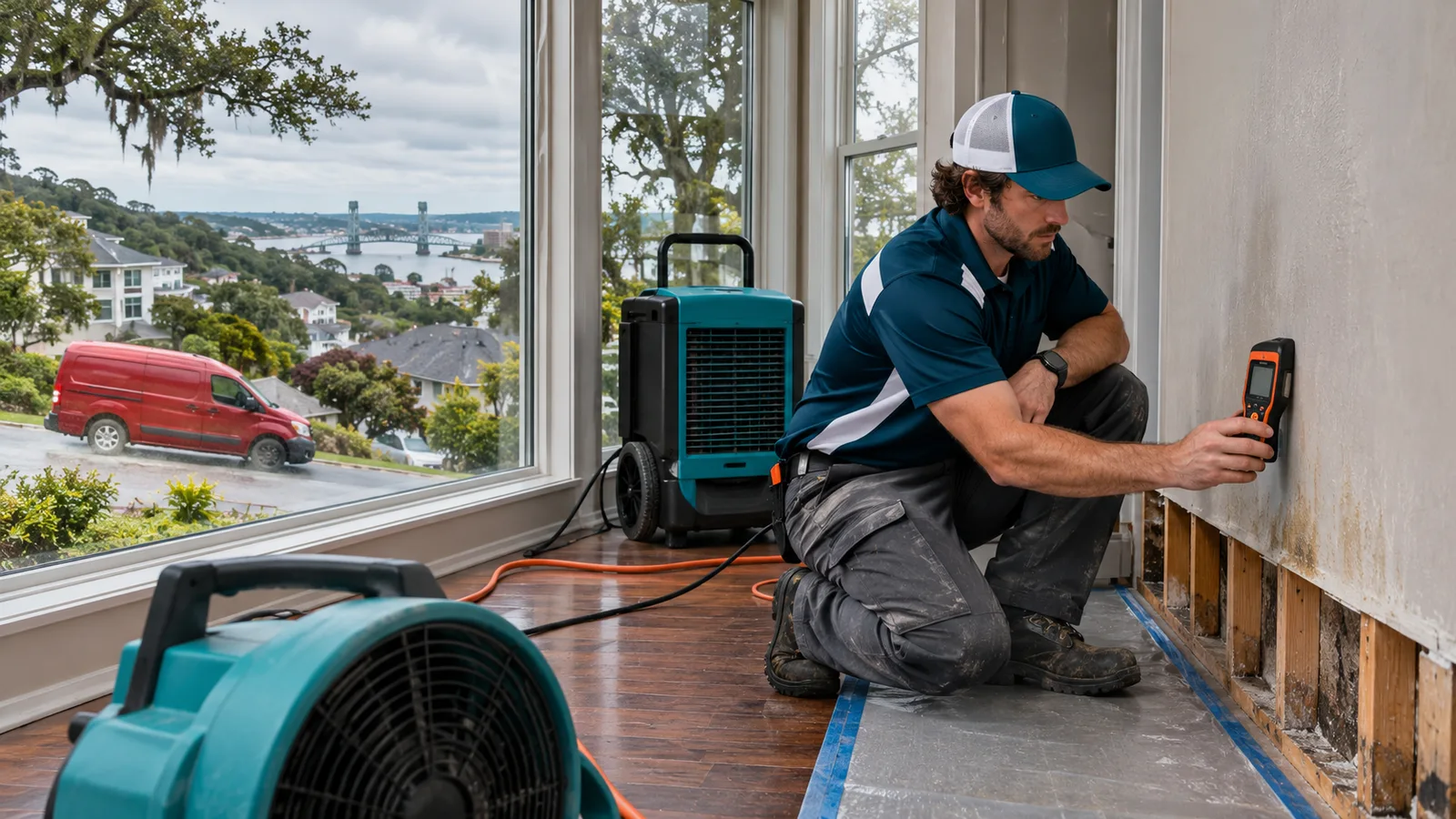
Moisture inspection and drying setup in a Wilmington property.
Immediate Water Response
Water damage restoration in Wilmington, NC begins with stopping the source when it is safe to do so, identifying how far the water has traveled, and removing standing water. Wet flooring may look like the main problem, but water can also move behind baseboards, into wall cavities, beneath cabinets, and through subfloor seams. A visual check alone cannot define the full drying area.
Water Damage Wilmington NC provides an organized response based on the condition of the property. Our water damage specialists serving Wilmington use moisture readings to guide extraction, material removal, equipment placement, and drying checks rather than relying on surface appearance. The goal is to stabilize the affected area, document what is wet, and avoid removing sound material without a practical reason.
Wilmington's coastal setting makes storm preparation and humidity control especially relevant. Tropical systems, wind-driven rain, plumbing failures, overflowing fixtures, and appliance supply-line leaks can all leave building materials wet. Prompt action limits continued migration and gives salvageable materials a better chance to dry.
Restoration Scope
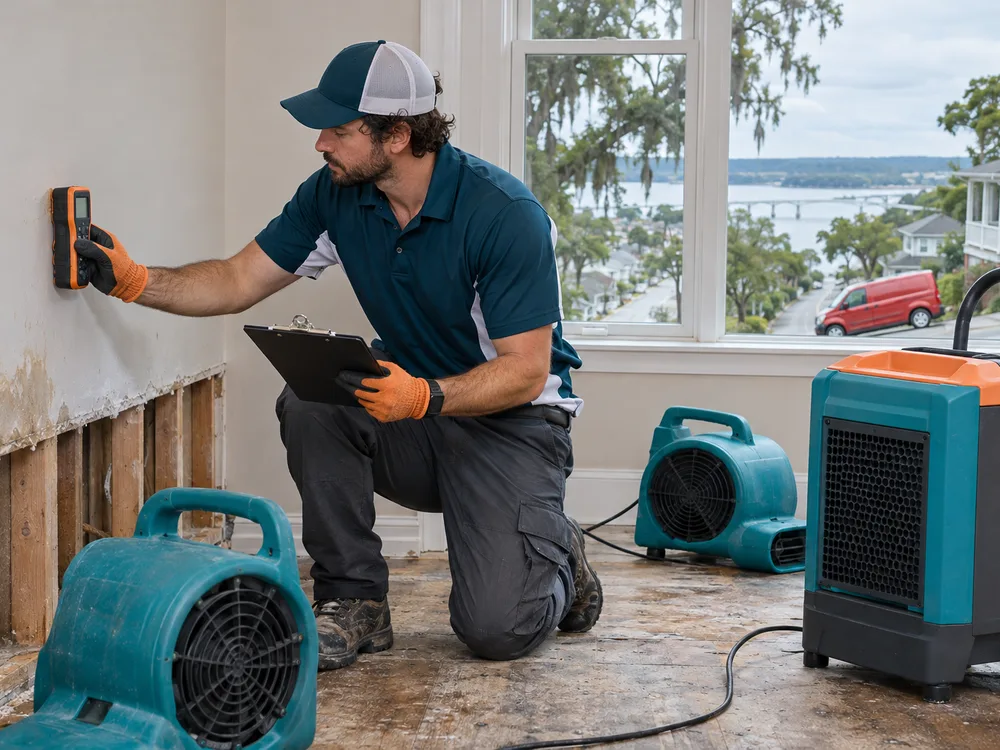
Restoration starts with the source and the type of water involved. Clean water from a supply line is handled differently from water that has contacted sewage or outdoor floodwater. Technicians commonly classify water by contamination category and assess the amount of evaporation load before choosing containment, cleaning procedures, and drying equipment.
The work may include water extraction, removal of unsalvageable porous material, cleaning, controlled drying, deodorization when needed, and preparation for repairs. Air movers promote evaporation from wet surfaces. Commercial dehumidifiers remove moisture from the air so that evaporation can continue. Moisture meters and, where appropriate, thermal imaging help locate areas that need closer inspection, but infrared patterns must be confirmed with direct readings.
Hardwood, laminate, carpet, drywall, insulation, cabinetry, and subflooring respond differently to water. Decisions are based on contamination, swelling, delamination, structural integrity, and whether the assembly can be dried safely. Contents may also need to be moved, blocked, cleaned, or documented before drying begins.
Water Loss Types
Failed supply lines, leaking pipes, overflowing tubs, and damaged fixtures can soak walls, floors, and rooms on a lower level. The affected area is mapped before drying begins.
Washing machines, dishwashers, refrigerators, and water heaters can release water quickly or leak slowly out of view. Restoration includes checking adjacent cabinets, flooring, and wall assemblies.
Wind-driven rain and roof openings can affect ceilings, insulation, walls, and flooring. The exterior source must be controlled before interior drying can remain effective.
Water with sewage or significant outdoor contamination requires stricter protective measures, cleaning, and disposal decisions. Porous materials may not be suitable for salvage.
Offices, shops, rental properties, and other occupied buildings need a plan that considers safety, access, contents, and interruption to normal use.
Staining, musty odors, soft drywall, or lifted flooring may point to water that has been present for some time. Inspection determines the practical limits of the affected area.
Restoration Process
The first priority is identifying hazards and confirming that the water source has stopped or is being controlled. Electrical risks, weakened ceilings, contamination, and slippery surfaces are considered before work proceeds.
Affected rooms and adjoining materials are checked with appropriate moisture instruments. The findings help define the work area, water category, material condition, and initial equipment plan.
Standing water is removed, and accessible wet surfaces receive focused extraction. Materials that cannot be safely cleaned or dried may be removed after their condition and location are documented.
The affected space is cleaned as the water category requires. Air movers and dehumidifiers are placed according to the structure, wet materials, and available airflow rather than arranged by room size alone.
Drying conditions and material readings are checked during the project. Equipment is adjusted as needed and removed after the targeted materials have reached an acceptable condition based on the drying plan.
Once drying is complete, the remaining repair needs can be defined. This may include replacing drywall, insulation, trim, flooring, paint, or other materials removed during mitigation.
Wilmington Property Context
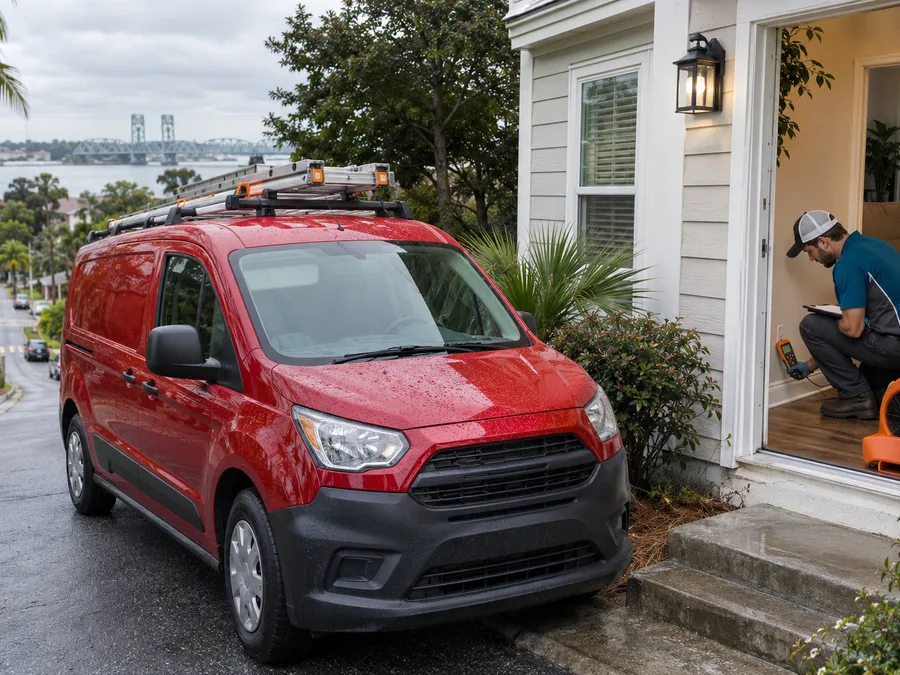
Wilmington properties face coastal storms, humid outdoor air, and wind-driven rain. High outdoor humidity can slow natural evaporation, so opening windows is not always the right response. A controlled drying chamber, managed airflow, and dehumidification can provide more dependable conditions inside the affected area.
Building type matters too. Historic homes around downtown can contain plaster, wood flooring, and assemblies that require careful investigation before demolition. Residences near Wrightsville Beach may face salt-laden stormwater and wind-driven rain, while properties near the Cape Fear River can be exposed to river flooding during major weather events. In established areas such as Forest Hills, finished wood floors and older wall assemblies may call for targeted drying and repeated moisture checks.
Outdoor floodwater is treated as contaminated because it can carry soil, microorganisms, chemicals, and debris. If local officials issue evacuation, reentry, or safety instructions after a storm, those directions take priority. Restoration should begin only when the property can be entered safely.
Choosing a Restoration Team
A useful estimate should explain the affected areas, planned extraction, materials that may need removal, cleaning needs, drying equipment, monitoring, and likely repair boundaries. Ask how contamination is classified, how hidden moisture will be checked, and what readings will be used to determine completion. The answers should relate to your building and water source rather than a fixed package.
Documentation also matters. Photos, moisture records, equipment notes, and a written scope can help property owners understand what was done. If an insurance claim may apply, contact the carrier promptly and keep records of the source, visible damage, emergency work, and affected belongings. Coverage and deductibles depend on the policy and cause of loss, so a restoration contractor should not promise that a claim will be covered.
Be cautious when anyone recommends extensive removal before measuring the affected materials, or promises that every item can be saved. Sound restoration decisions depend on contamination, exposure time, material condition, accessibility, and whether drying can be verified.
Restoration Cost Factors
Professional water damage restoration in Wilmington typically costs about $1,200 to $6,000 for a limited to moderate loss, while widespread flooding, contaminated water, or major material removal can cost $8,000 or more. These are general, nonbinding ranges, and reconstruction may be priced separately.
Final cost depends on the water category, affected area, extraction needs, hidden moisture, materials, access, equipment time, cleaning, and disposal. Emergency conditions can also change labor needs. The exact cost is confirmed after the property inspection and written scope.
Water continues moving through porous materials after the visible puddle is gone. Arrange an assessment early so the affected area can be measured, stabilized, and dried under a clear plan.
Call for Emergency HelpCommon Questions
Restoration should begin as soon as the property is safe to enter and the water source can be controlled. Coastal storms may affect access, power, and technician availability across the Wilmington area, so report the loss promptly and follow official reentry instructions after severe weather. While waiting, avoid standing water near electrical sources and do not enter rooms with sagging ceilings.
Many limited water losses require several days of controlled drying, but the actual timeline depends on the materials, contamination, saturation, airflow, and indoor conditions. Wilmington's humid outdoor air can make open-window drying ineffective. Completion should be based on recorded moisture conditions rather than a preset number of days.
Some wet materials can be saved when the water is relatively clean, the response is prompt, and drying can be verified. Drywall may be dried in place in suitable conditions, while swollen laminate, contaminated carpet pad, deteriorated insulation, or delaminated materials often require removal. Hardwood needs careful moisture testing because the surface may feel dry while the boards or subfloor remain wet.
A qualified restoration company can address sewage and other contaminated water using protective measures, containment, removal, cleaning, and disposal procedures suited to the loss. Porous materials that absorbed sewage are commonly removed rather than dried for reuse. The plumbing or drainage cause must also be corrected before restoration can be completed.
Coverage depends on the policy and the cause of the water loss. Sudden plumbing failures may be treated differently from long-term seepage, maintenance problems, storm surge, or rising outdoor floodwater. Standard homeowners policies commonly exclude flood damage, which is generally handled through separate flood coverage. Notify the insurer promptly and ask for claim-specific instructions.
Household fans may be inappropriate when water is contaminated, mold growth is suspected, or electrical safety is uncertain. Air movement can spread contaminated particles beyond the original area. If the source was clean and the room is electrically safe, limited airflow may help, but professional extraction and dehumidification are much more effective than fans alone.
Temporary relocation depends on contamination, electrical conditions, the number of affected rooms, noise, heat from equipment, and whether essential areas remain usable. A contained loss in one room may allow normal occupancy, while sewage, extensive demolition, or storm damage may make the building unsuitable. The inspection should address occupancy before equipment and containment are set.
Describe what happened, when it started, and which areas are affected. Water Damage Wilmington NC can assess the conditions, explain the next steps, and prepare a restoration scope based on the property.